The Power Of Postures

Art 02 February, 2026

Postures are more than just physical positions—they are powerful expressions that convey stories, emotions, and deeper meanings. In art and culture, each posture reflects values, beliefs, and aesthetics, shaping how we understand form and movement. This blog explores the significance of postures, from their ancient roots to their lasting impact on artistic expression.
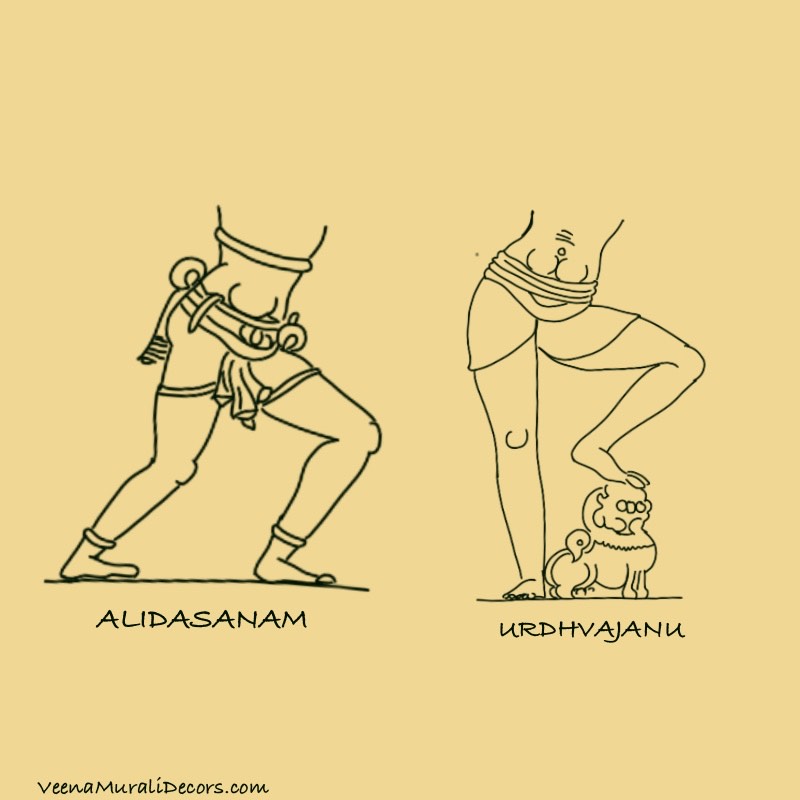
The Alidasanam (or Alidam) posture features a standing figure with the left leg bent in front and the right leg extended behind. The arms mimic the stretched string of a bow, with the left hand holding the bow in Shikhara Mudra and the right hand in Kataka Mudra, as if pulling back the string and arrow.


Urdhvajanu is a posture where one leg is firmly planted on the ground, while the other is raised, bent at the knee, and placed on a pedestal or higher plane. Notable examples include Tripura Samhara Shiva with one leg on his chariot and Durga with one leg on the ground and the other on Mahishasura's head. Ekapada Sthanakam is a posture where one leg is firmly grounded, and the other is bent, resting near the knee. This can be seen in meditative images of Arjuna. A variation features one leg on the ground and the other bent, placed on the genitals with the foot facing upward, as seen in meditative depictions of Kamakshi.


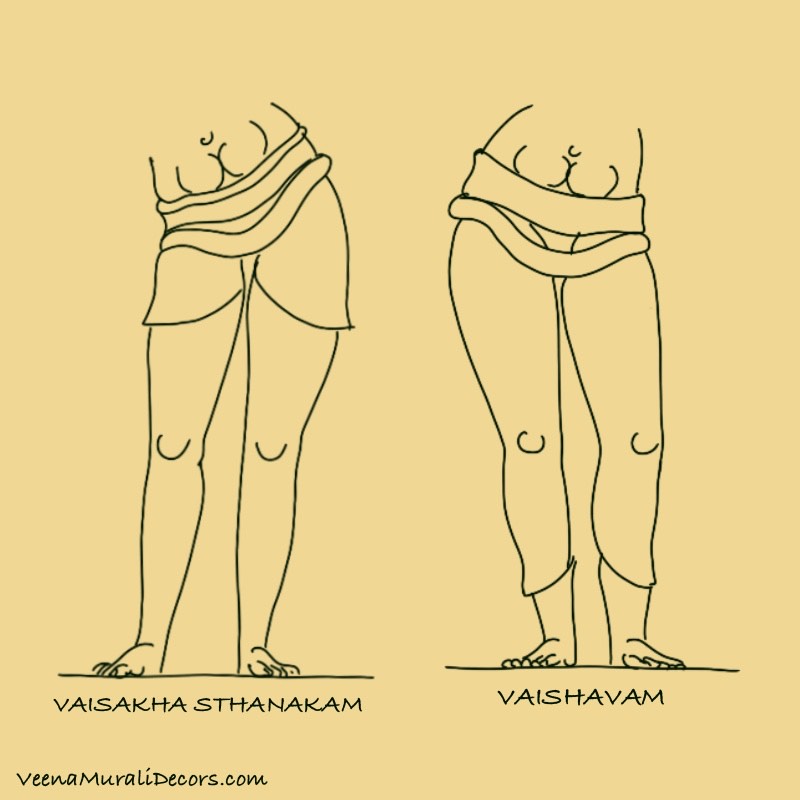
Vaisakha Sthanakam is a posture where one leg is firmly on the ground, and the other is stretched forward, symbolizing the bow of the Visakha constellation. This stance is often associated with Muruga and Rama, both depicted holding a bow.Vaishnavam is a similar posture, with one leg grounded and the other slightly bent, held gracefully. Known as Sthitha Kunjitham, it represents a calm, satvik state and is used for images of Shiva, Vishnu, Shakti, and others.


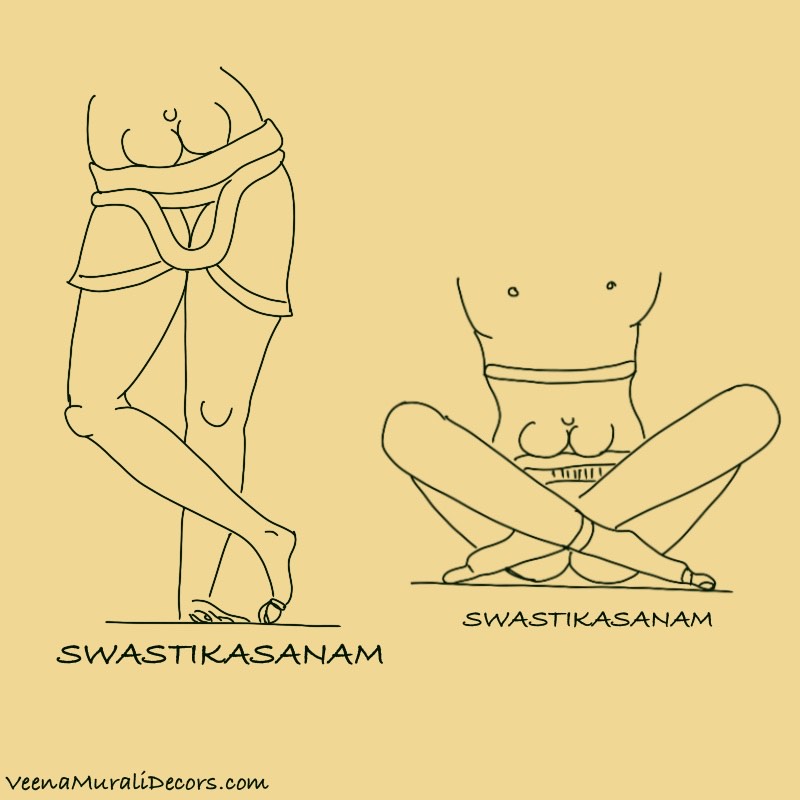
Swastikasanam is a posture where one leg is firmly on the ground, and the other is crossed in front, resting on its toes. It can be seen in images of Krishna playing the flute and Vrishabhantika Shiva.As a seated posture, it is called Yogasana, and when one leg is folded and the other hangs down, it is called Uthukutikasanam. When this pose involves effort, the body and bent leg are tied with a yogapattam, with one hand in Chin Mudra and the other in Danda, forming Ardha Yogasanam. This symbolizes a yogic state of balance and focus.


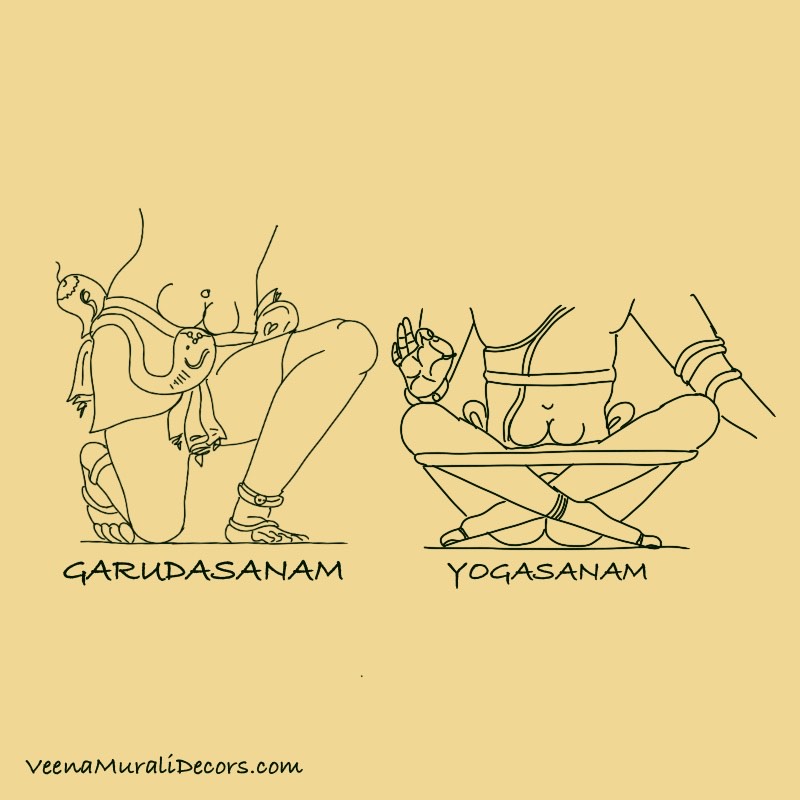
Garudasanam features the right leg folded inward with the knee on the ground, while the left leg is bent and stretched away. It is often used to depict Garudazhvar or a devotee kneeling in prayer. When the legs are in the same position with outstretched wings and hands held in a flight-like posture, it is called Gamanakolam, seen in images of Garuda.Yogasanam represents a yogic trance, where the yogi sits cross-legged in Padmasanam, with one hand in Gnana Mudra near the chest and the other on the thigh. The eyes focus on the nose. A variation includes the legs crossed, feet touching the genitals, with a Yogapattam binding the knees, and one hand in Danda Mudra, the other in Gnana or Chin Mudra.


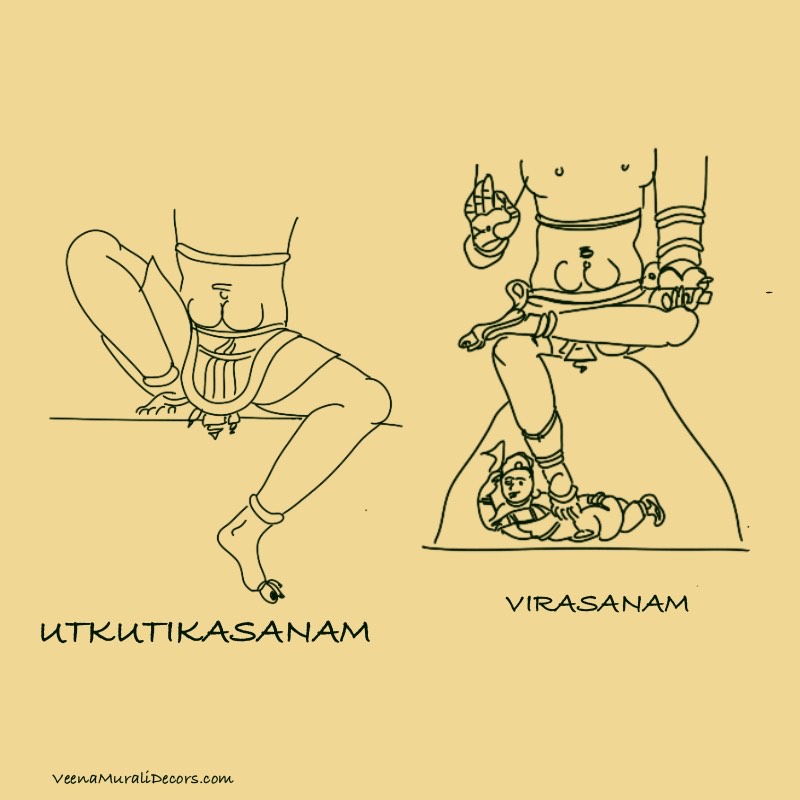
Uthkutikasanam is when one leg is supported vertically on a pedestal, and the other hangs down, seen in images of Yoga Dakshinamurti and Ayyanar.Virasanam is a regal pose where one leg hangs down, the other is bent with the foot on the thigh, and the body is held erect, symbolizing a monarch or leader. This is also called Raja Lingasanam.


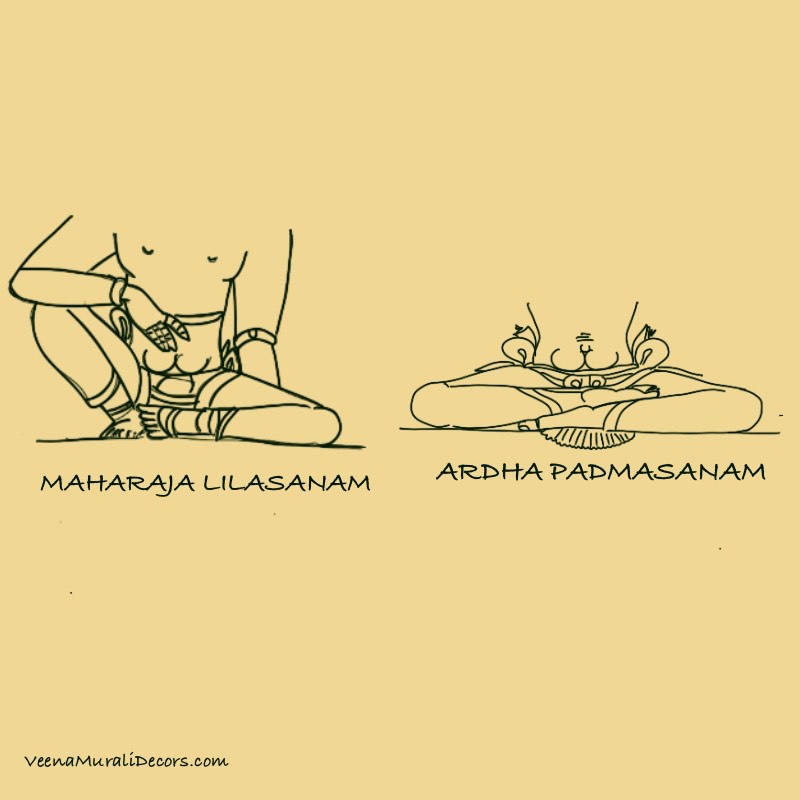
Maharaja Lilasanam is a posture where the right leg is vertical, the left leg is folded flat, the right elbow rests on the right knee, and the left hand supports the body, creating a relaxed arch. This is seen in images of Buddha and Simhanatha.Ardha Padmasanam is a seated posture where one leg is folded and the other foot rests on its thigh. The body is held erect, and this is also known as Paryankasanam or Vajrasanam in Buddhist tradition.


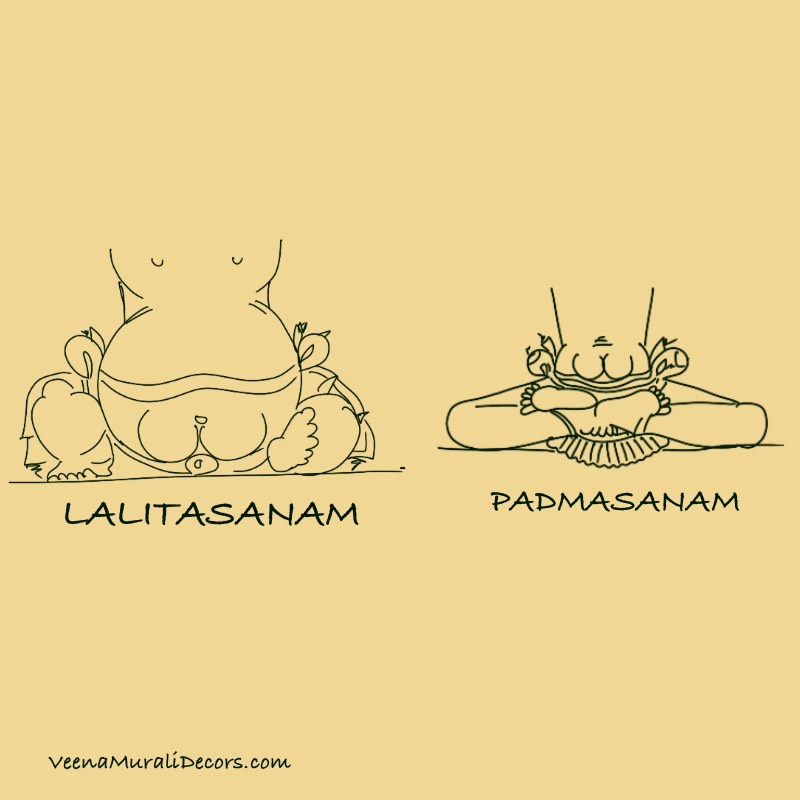
Lalitasanam is a seated posture where one leg is vertical and the other is folded flat, seen in images like Vinayaka.Padmasanam is a cross-legged posture with feet resting on the thighs, body erect, and is also known as Paryankasanam or Vajrasanam in Buddhism. When one leg is folded and the other rests on its thigh, it's called Ardha Padmasanam.


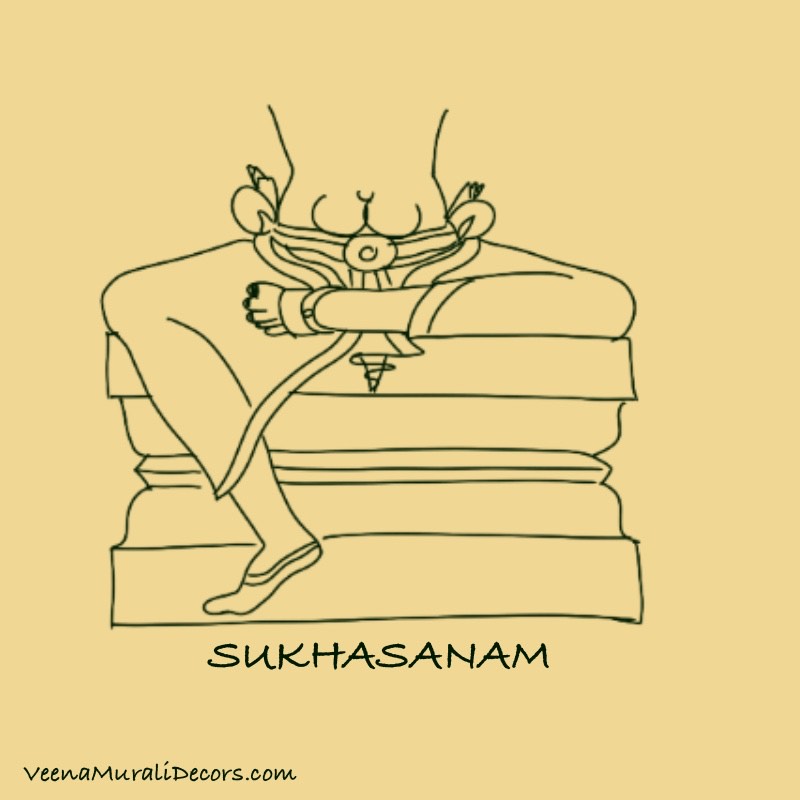
Sukhasanam is a relaxed posture where the body is erect, one leg is folded flat, and the other hangs freely. The hands are held in balance. This posture is commonly used for images of Shiva and Vishnu, known as Sukhasana Vishnu or Sukhasana Shiva.


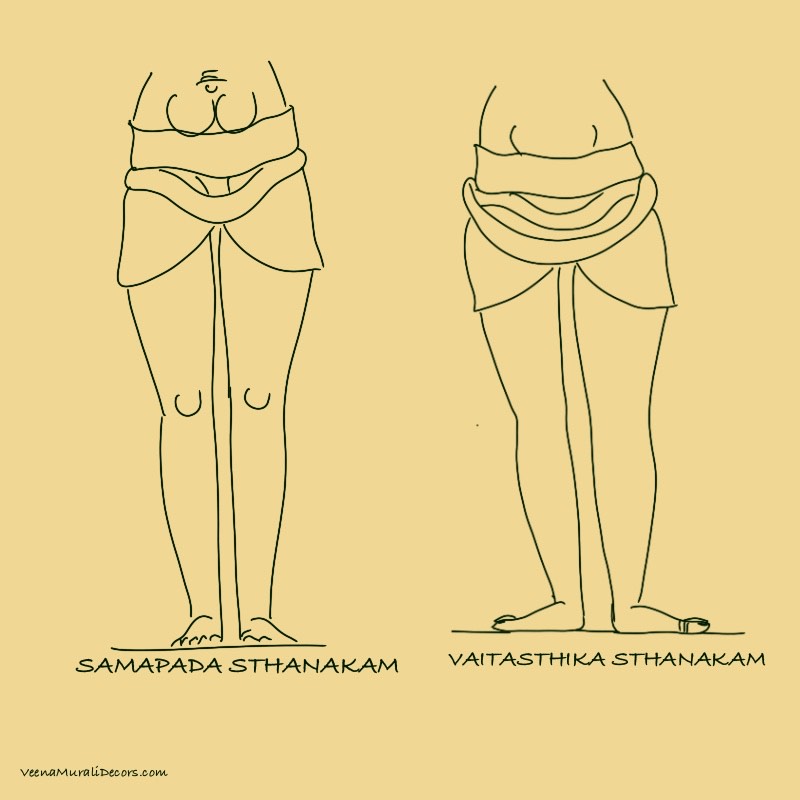
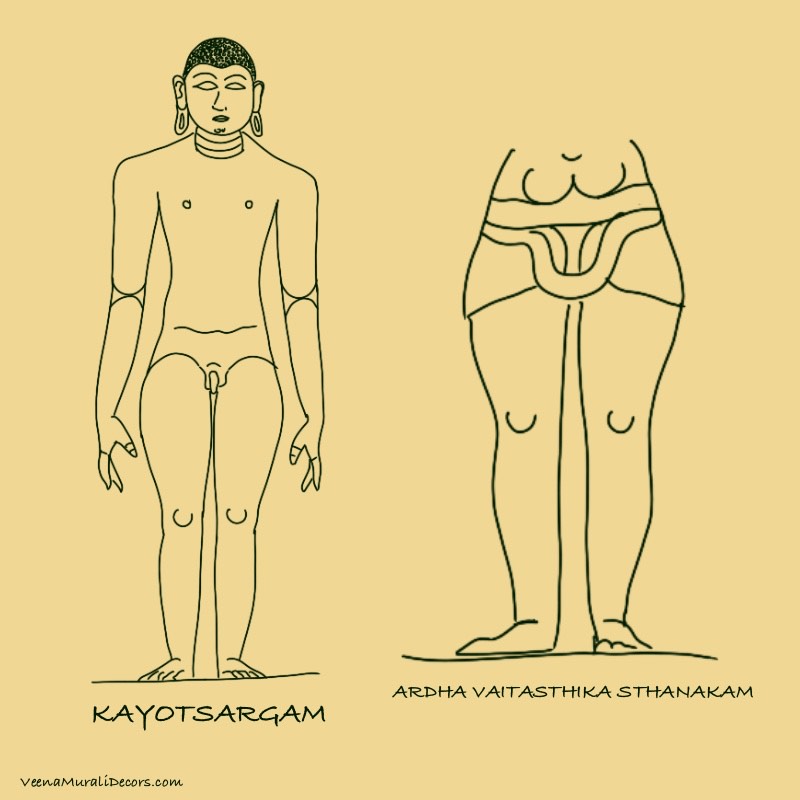
Sthanakam: Ninra Kolam (vertical stance) is an erect posture with feet equidistant and body held straight, without any flexion. The gaze is direct. Samapada Sthanakam is a similar stance, with arms and legs close together, and hands in various mudras. It has two sub-divisions: Vaitasthika Sthanakam and Ardha Vaitasthika Sthanakam. Images of Chandrashekhara and Vishnu often depict this pose.


Ardha Vaitasthika Sthanakam is when the distance between the big toes is half of Vaitasthika Sthanakam, or 1 chan (half the span of the thumb to the little finger).Kayotsargam is a posture where the feet are together, body erect, arms hanging close to the body, and palms near the thighs. It symbolizes detachment and is also known as Ajanu Lamba Bahu or Taltazh Tadakkai in Tamil. The Gomateswara image is a notable example.


Total Views : 1123

Related blogs

Art

Dindigul Lock – Securing the Treasures of Dindigul with a Timeless Lock

The Dindigul lock is more than just a tool; it is a symbol of timeless artistry and masterful ingenuity. Each lock, meticulously handcrafted, embodies the legacy of skilled craftsmen, merging ancient inspiration with unparalleled precision. These locks are not just strong; they are works of art, telling a story of...

Read More
Art

Thanjavur Veena: Bringing the Enchanting Sounds to Life

A Little HistoryThe Thanjavur Veena, as its name beautifully reveals, hails from the illustrious Thanjavur region of Tamil Nadu, a land steeped in artistic and musical heritage. From ancient times, this vibrant locale has thrived under the benevolent patronage of the Cholas, Nayakas of Madurai, and the Marathas. It is...

Read More
Art

Nachiyar Koil Lamp-"Illuminating Tradition and Craftsmanship"

In the vibrant heart of Tamil Nadu lies the village of Nachiyar Koil, renowned for a craft that has illuminated sacred spaces and homes for generations: lamp making. This traditional art form, deeply embedded in South Indian culture, transforms raw materials into exquisitely designed lamps serving both functional and ceremonial...

Read More
Art

Sacred Gestures

In Indian art and culture, gestures, or hastas, are not mere hand movements but profound symbols that communicate divine narratives, philosophical concepts, and emotions. Rooted in ancient traditions, these gestures bridge the tangible with the metaphysical, offering insight into the spiritual essence of deities and the cosmic principles they represent....

Read More
Art

A Symphony in Wood

Mysore Rosewood InlayAs dawn paints the Mysore Palace in golden hues, its intricate carvings whisper stories of a regal past. Just as the palace embodies artistic grandeur, Mysore’s rosewood inlay work transforms wood into a canvas of heritage and precision.Inspired by the elegance of the Mysore Dasara procession, this craft...

Read More
Art

Kavadi Aattam

A Sacred Journey of Faith, Music, and Devotion In the heart of the Tamil Hindu community, where faith intertwines with tradition, the Kavadi Aattam ritual emerges as a sacred dance of devotion, steeped in centuries-old myths and spiritual significance. It is a journey not only of the body but of the...

Read More
Art

Palm Leaf Manuscripts

India, a land of timeless traditions, has long been a guardian of ancient wisdom, preserving knowledge through the delicate strokes of scribes. Long before paper, stories, scriptures, and celestial insights found their way onto nature’s own pages—palm leaves in the south and Bhurjapatra in the north.In the shadow of the...

Read More